Systems, Explained
Technology should reduce complexity—not add to it.
PT Asa Teknologi Mandiri Indonesia designs, delivers, and supports practical software, infrastructure, and integrations grounded in real operations. We start by mapping processes, data flows, and constraints, then make accountable design choices—documented, explainable, and built with security and maintainability from the beginning. The goal is not just a successful launch, but systems your teams can trust, run, and improve for years.
Building Systems People Can Explain and Maintain
PT Asa Teknologi Mandiri Indonesia was built around a simple constraint: technology should reduce operational complexity, not create a new layer of it. We design, deliver, and support information systems across software, infrastructure, and integration by starting with context—how decisions are made, how data moves, where risk accumulates, and how people actually work. From there we translate intent into documented requirements, explicit architectures, and measurable non‑functional targets (security, availability, performance) so the system can be maintained and improved without guesswork. Our philosophy is responsibility over novelty. We treat every system as a long‑term asset that must be explainable: design choices are justified with trade‑offs, access control and data integrity are designed in from the start, and handover includes operational artifacts such as monitoring, backup procedures, role definitions, and change management. This “systems-first” way of working—process mapping before tools, stable interfaces before rewrites, operational readiness as part of delivery—helps clients modernize safely and keep systems healthy years after launch.
1. Systems-First Delivery: Context Before Tools We begin by mapping processes, stakeholders, data flows, constraints, and success criteria before selecting frameworks or platforms. Requirements are written as specifications that can be tested: user stories, process diagrams, data definitions, and non-functional requirements such as security, availability, and performance. This reduces rework and makes scope, architecture, and operational impact visible early.
2. Integration That Preserves What Already Works Many organizations don’t need a full rebuild; they need reliable connections between existing applications, databases, and third-party services. We design integration layers with stable APIs and clear contracts so data moves consistently and securely across teams and systems. This supports phased modernization and reduces disruption to operations.
3. Security and Data Integrity Designed In Security is treated as an architectural requirement, not a final checklist. We define role-based access, configuration baselines, auditability, and vulnerability-aware design during architecture and implementation. The goal is to make risk manageable through explicit controls, clear ownership, and traceable system behavior.
4. Operational Readiness as a Deliverable A system that launches but cannot be operated is not finished. We include documentation, monitoring, backup strategies, access procedures, and a structured handover so internal teams can run and evolve the system with confidence. Post-launch support is handled as an improvement loop—bug triage, performance observation, and iteration based on evidence from real usage.



Custom Software Development (Web & Mobile)
We design and build applications around real workflows, not assumptions. Work includes discovery, requirements, UX flows, architecture, iterative development, testing, deployment, and structured handover. Decisions are documented so the system can be maintained, extended, and audited without guesswork.
Information Systems & Business Process Digitalization
We convert manual or fragmented processes into coherent systems with clear data models, traceable status transitions, audit trails, and reporting. The aim is clarity and accountability: who did what, when, why, and what the current state means operationally.
Systems Integration & API Development
We connect existing applications, databases, and third-party services through stable interfaces so data moves reliably and securely. Integration is treated as a core system design problem—data ownership, validation, error handling, access control, and change tolerance are defined upfront to reduce long-term fragility.
Products & Services
PT Asa Teknologi Mandiri Indonesia delivers information systems that reduce operational complexity and remain explainable over time. Our services are built on clear requirements, justified design trade-offs, security-by-design, and operational readiness—so the result is not only a “working system,” but a maintainable asset with documented decisions, stable integration, and a realistic path for improvement.
Infrastructure, Cloud Enablement & Security Foundations
We plan and implement on-premise, cloud, or hybrid environments with operational stability as a requirement. This includes deployment approach, monitoring, backups, role-based access, secure configuration baselines, and guidance for vulnerability and incident-aware design—so reliability and security are built in from the start, not added later.
How We Work
We build information systems with one aim: reduce complexity without reducing capability. Our focus is not on quick launches, but on systems that are clear, secure, and maintainable—because technology only helps when it stays understandable and stable over time.


Systems-first before tools
We start by mapping processes, data flows, stakeholders, and constraints. Only after the context is clear do we choose architecture and technology. This prevents solutions that look modern but fail in day-to-day operations.
Clarity and accountability by design
We document what matters—scope, requirements, architecture, roles, and operational procedures—so the system can be explained, audited, and improved. Every design choice is tied to real trade-offs: cost, risk, maintainability, and performance.
Integration that protects what already works
Modernization does not have to mean replacing everything. We build stable interfaces (APIs, data pipelines, integration layers) so existing applications and databases can work together reliably and securely, with a clearer “single source of truth.”
Operational readiness as part of delivery
A system is not finished when it goes live. We deliver with monitoring, backups, access control, change management, and knowledge transfer. Post-launch support is structured: observe real usage, fix what breaks, and improve based on evidence.
Work Built to Hold Up Over Time
These projects reflect how we work: start with context, design systems that are explainable and maintainable, and deliver with operational readiness—security, monitoring, documentation, and handover—treated as part of the system, not an add-on.
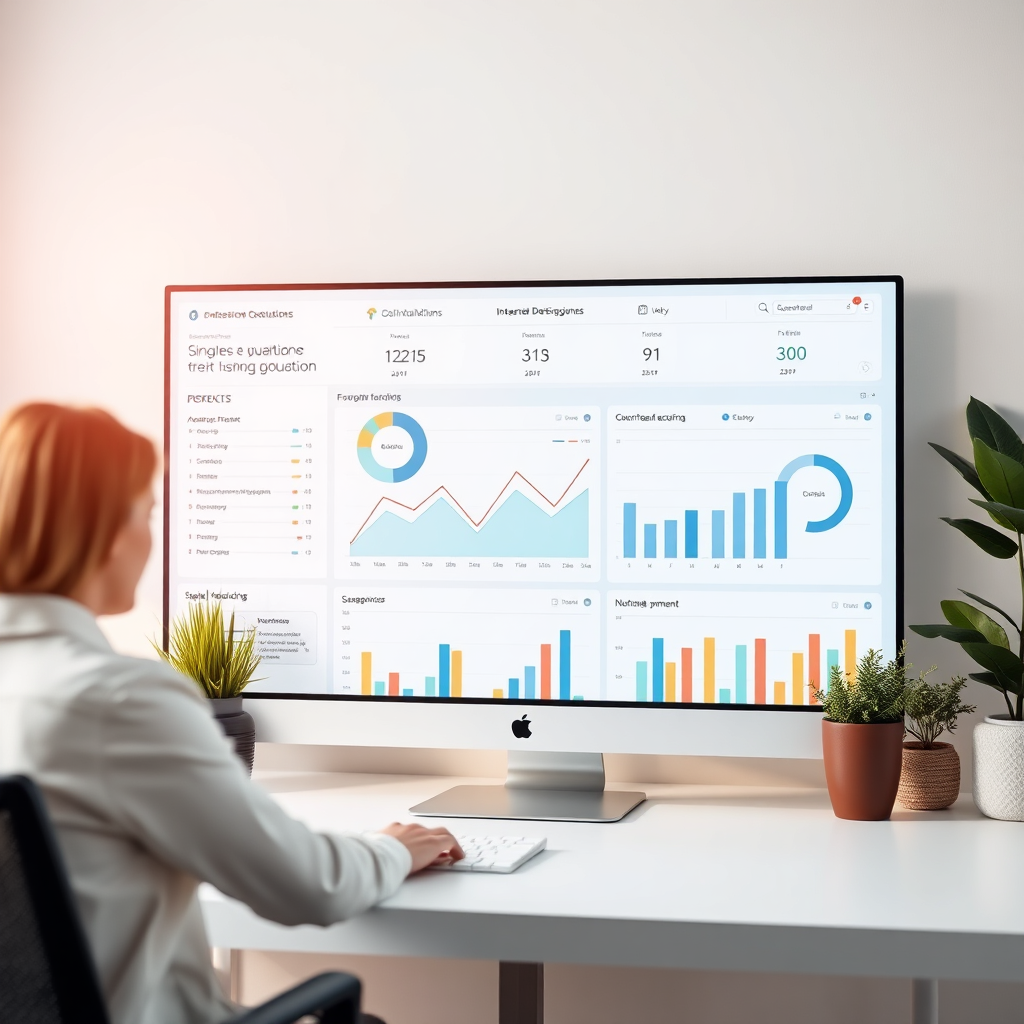
Integrated Operations Dashboard with a Single Source of Truth
We consolidated reporting that was scattered across spreadsheets and department tools by building an integration layer and a consistent data model first. The dashboard became a reliable view of shared numbers, reducing disputes and speeding up decision-making.

Service Request and Approval Workflow with Auditability
We replaced email- and chat-based approvals with a workflow system built around role-based access, clear status transitions, and audit trails. The intent was accountability: decisions are visible, responsibilities are clear, and the process stays practical for daily use.

Hybrid Infrastructure Modernization and Secure Access Foundation
We improved reliability and security for an organization with critical on-prem systems and expanding remote work needs. The work was phased: establish secure access, monitoring, and backup discipline first, then modernize application and data layers without disrupting operations.

Systems-First Discovery and Roadmap Assessment
Before building, we map processes, data flows, constraints, and risks—then produce a concise current-state snapshot and a phased roadmap. The goal is clarity: clients should understand trade-offs and next steps, even if they choose not to proceed with implementation.
79+
An initial consultation and high-level assessment: current-state snapshot, key risks/opportunities, and a phased roadmap.
Build Systems That Stay Clear, Secure, and Maintainable
PT Asa Teknologi Mandiri Indonesia
12345 Street Name,
City.
State
12345
(123) 456 7890.
undefined
undefined

Team Profile
We are a small team of engineers and system thinkers who treat technology as a long-term asset. Our work starts with context—how decisions are made, how data moves, and where risk accumulates—then turns that understanding into architectures and implementations that can be explained, maintained, and improved over time. Across software, infrastructure, integration, and security, we aim for clarity in documentation, accountability in trade-offs, and operational readiness at handover—not just a system that launches, but one that stays healthy.

Raka Pratama
- Solution Architecture & Systems Lead
Raka leads discovery and context mapping, turning business intent into clear requirements, system boundaries, and architecture decisions. He focuses on explaining trade-offs (risk, cost, maintainability, performance) and ensuring designs remain understandable and defensible as the system evolves.

Diah Kusumawardani
- Software Engineering Lead (Web & Mobile)
Diah oversees iterative implementation—from UX flows and data handling to testing and release discipline. Her emphasis is building software that matches real workflows, keeps complexity visible, and stays maintainable through clean structure, practical documentation, and careful change management.

Arif Nugroho
- Integration & Data Systems Engineer
Arif designs stable interfaces between systems: APIs, data pipelines, and integration patterns that reduce duplication and prevent conflicting sources of truth. He is responsible for data models that support auditability, reliable reporting, and traceable operations across departments and tools.

Maya Lestari
- Infrastructure, Security & Operations Engineer
Maya builds operational readiness into delivery: environment planning (on-prem, cloud, hybrid), access control, monitoring, backup strategies, and secure configuration baselines. She approaches security as a design requirement and treats post-launch support as structured learning, not emergency response.
Systems First: Turning Operational Reality into Reliable Technology
PT Asa Teknologi Mandiri Indonesia
PT Asa Teknologi Mandiri Indonesia was built on a simple observation: many organizations invest in technology but still struggle to get consistent outcomes because solutions are assembled without enough context. Our work starts earlier than tools and features—we begin with how decisions are made, how data moves, how risk is handled, and how people actually work—so the resulting systems remain understandable, secure, and dependable over time.
PT Asa Teknologi Mandiri Indonesia is an Indonesian technology company formed around one clear belief: technology should reduce complexity, not add to it. We design, deliver, and support practical information systems—software, infrastructure, and integration—so organizations can operate with clarity, security, and reliability. Our work sits between engineering discipline and daily operations: we translate business intent into systems that people can trust, maintain, and evolve.
Our journey began with a pattern we repeatedly saw in the field. Organizations were spending on new applications, platforms, and dashboards, yet results were inconsistent. The common issue was not effort—it was context. When systems are built without understanding how an organization actually functions (processes, data ownership, approval paths, operational constraints, and risk appetite), implementations may launch but remain fragile. We exist to close that gap by building on strong fundamentals: clear requirements, transparent architecture, measurable performance, and a thoughtful handover that leaves clients with durable capability rather than a short-lived project.
Our philosophy is grounded in responsibility. We treat systems as long-term assets that must be explainable and maintainable. That means we work with clarity (documentation that makes scope, architecture, and operations understandable), accountability (design decisions justified by trade-offs—cost, risk, maintainability, performance), security and integrity (protection and access control designed in from the beginning), collaboration (alignment so stakeholders share a common mental model), and continuous improvement (support and refinement as a structured learning process, not an afterthought).
What distinguishes our approach is a way of working rather than a single feature. We are deliberately systems-first: we map business processes, data flows, and operational constraints before selecting tools or patterns. We prioritize clean integration, connecting existing applications, databases, and third-party services through stable interfaces so clients can modernize without discarding what already works. And we treat operational readiness as part of the deliverable—monitoring, backups, role-based access, change management, and knowledge transfer—because the real test of a system is whether it stays healthy years after launch.
Our services cover the full lifecycle: custom software development (web and mobile), information systems and business process digitalization, systems integration and API development, infrastructure and cloud enablement (on-premise, cloud, or hybrid), cybersecurity foundations, and maintenance/support with managed improvement. Across these areas, our core expertise is end-to-end execution—from solution architecture and systems analysis to software engineering, database design, integration patterns, cloud planning, security-by-design, and operational practices that keep systems stable over time.
That lifecycle is reflected in how we work. We start with discovery and context mapping, then define requirements and scope with concrete artifacts (user stories, diagrams, data requirements, and non-functional needs like security and availability). We move into architecture and design that fits the environment, implement in iterations to reduce uncertainty, and apply quality assurance that considers not just functionality but operational risk. Deployment includes transition artifacts—documentation, access roles, backup procedures, monitoring, and a handover plan—followed by post-launch support and improvement based on evidence from real usage.
Representative work illustrates the outcomes of this philosophy. In an Integrated Operations Dashboard engagement, the real achievement was establishing a single source of truth through a reliable data model and integration layer—reducing disputes over numbers and speeding up decisions. In a Service Request and Approval Workflow System, the priority was accountability: role-based access, audit trails, and clear status transitions made decisions traceable without turning the process into bureaucracy. In a Hybrid Infrastructure Modernization project, phased improvement—secure access, monitoring, and backup discipline first—allowed modernization without disrupting legacy-critical operations.
We want visitors to start a thoughtful conversation, not rush into implementation. To make that first step useful, we offer an initial consultation focused on framing the problem, followed by a concise high-level assessment: a current-state snapshot (as we understand it), key risks and opportunities, and a phased roadmap. Even if someone chooses not to proceed, they should leave with clearer thinking about what it will take to build technology that lasts.